
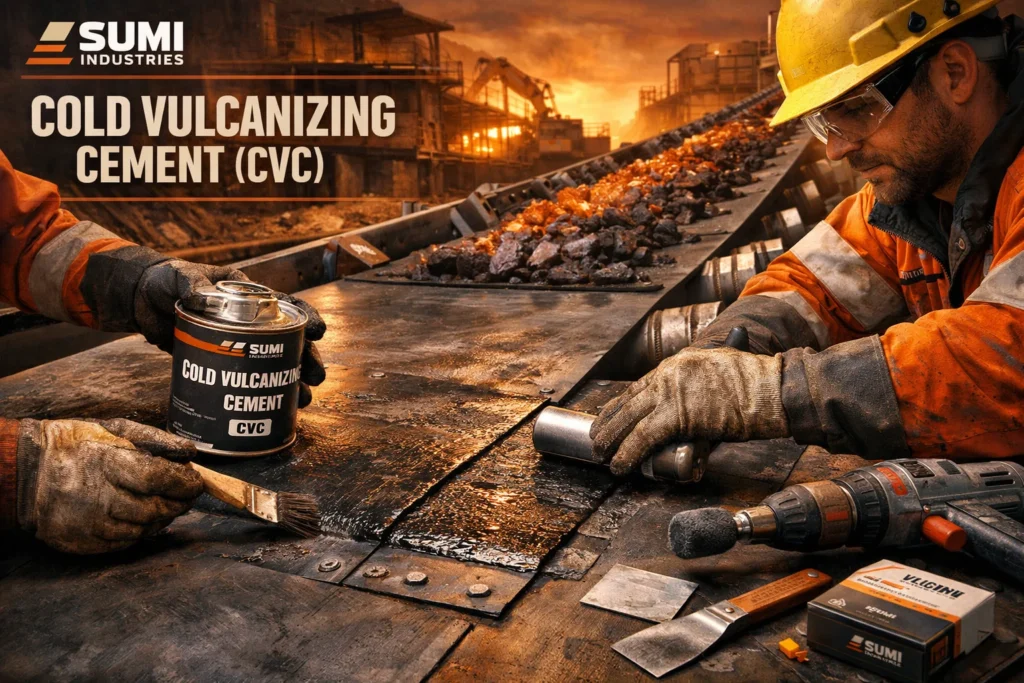
In mining, steel, and heavy industries, the reliability of conveyor belts and rubber components is critical. Even a small failure can cause downtime, reduce productivity, and increase maintenance costs. One of the most effective solutions for durable, long-lasting rubber bonding is Cold Vulcanizing Cement (CVC). Unlike heat-based vulcanization, which requires presses, ovens, or specialized machinery, CVC works at room temperature, offering speed, convenience, and safety — making it ideal for industries that cannot afford extended downtime. This guide explains what cold vulcanizing cement is, where it is used, how it works, and why Sumi CVC is trusted by maintenance teams worldwide.
1. What Is Cold Vulcanizing Cement?
Cold vulcanizing cement is a high-performance rubber adhesive that chemically bonds rubber surfaces without heat. Its formulation allows it to penetrate rubber, react with hardeners, and create a strong, durable bond comparable to heat-vulcanized joints.
- Sumi CVC is designed for industrial use with:
- High bonding strength for rubber-to-rubber, rubber-to-steel, and other materials
- Resistance to water, oil, acids, and high temperatures
- Consistent, reliable performance across batches
2. Where Is CVC Used?
Cold vulcanizing cement is widely used in industries where durable rubber bonds are required:
Conveyor Belt Repair
- Splicing belts in mining, cement, power plants, and steel industries
- Edge reinforcement and patching
- Repairing damaged belt sections on-site
Pulley Lagging & Rubber-to-Metal Bonding
- Pulleys, rollers, and anti-vibration pads
- Rubber linings and industrial equipment repair
Industrial Rubber Repair
- Rubber sheets, tank linings, gaskets, and seals
- Machinery parts that require flexible yet strong bonding
3. How Does the Cold Vulcanizing Process Work?
Step 1: Surface Preparation
-
Clean the surface from dust, oil, rust, or oxidized rubber
-
Buff the area for better adhesive penetration
Step 2: Apply the Cement
-
Use a brush to apply an even layer of Sumi CVC
-
Ensure full surface coverage for maximum adhesion
Step 3: Flash Time
-
Allow a short period for solvents to evaporate and the surface to become tacky
Step 4: Join and Roll
-
Place the patch or mating surface
-
Apply firm pressure using a roller to remove air pockets
Step 5: Curing
-
Sumi CVC cures at ambient temperature
-
Provides fast, reliable, and long-lasting bonds
4. What Makes a Good Cold Vulcanizing Cement?
-
Strong Adhesion: Forms permanent chemical bonds
-
Heat Resistance: Stable under operational and frictional heat
-
Chemical Resistance: Withstands oil, water, and acids
-
High Coverage & Bond Strength: Economical usage on large conveyor belts
-
Versatile: Works with NR, SBR, NBR, EPDM, neoprene, and rubber-to-metal surfaces
5. Best Practices for Using Sumi CVC
-
Store in a cool, dry place
-
Mix thoroughly before application
-
Maintain ambient temperature during bonding
-
Apply even pressure during rolling
-
Avoid water exposure until curing is complete
-
Follow recommended flash time for optimal bonding
Following these steps ensures maximum performance, long-lasting durability, and reliable industrial operation.
Conclusion
Cold vulcanizing cement is a powerful, convenient, and reliable bonding solution for industries that demand durable rubber joints without downtime.
Sumi CVC combines:
-
Strong adhesion
-
Heat and chemical resistance
-
Industrial-grade durability
-
Consistent performance for conveyor belt splicing, pulley lagging, and rubber-to-metal bonding
For reliable, field-tested solutions that reduce maintenance time and keep operations running smoothly, Sumi Industries’ Cold Vulcanizing Cement is the trusted choice.
Connect With Us
For technical guidance, product selection, or bulk orders of Sumi CVC, reach out to our team: www.sumiindustries.com